Your Period Pain Has a Message: Why Painful Periods Are Common but Not Normal
By Dr. Danielle Blech, DAC, L.Ac., Dipl.O.M. | The Acupuncture Portal, Gulfport, FL
April, 2026
Somewhere along the way a deeply harmful idea settled into our cultural understanding of womanhood: that menstrual pain, debilitating cramps, heavy bleeding, and PMS come with the territory. That suffering every month marks a rite of passage. That the appropriate response to a woman describing days of pain so severe she misses work or school or life is to hand her a heating pad and some ibuprofen. Every social circle I am a part of repeats harmful euphemisms that perpetuate shame and reinforce stigma such as, “the time of the month, the rag, the curse, the week of doom”, etc.
In Traditional Chinese Medicine, the menstrual cycle serves as one of the most important diagnostic tools available. It functions as a monthly report card and a window into the health of the entire system. I ask my patients every detail. Their cycle regularity, PMS symptoms, quality and quantity of their blood, the color of their blood, and their emotional state. A painful period, a late period, a heavy period, a scanty period, blood with clots, a cycle that arrives with rage or grief or anxiety so intense it feels like a different person has taken over. None of these represent a body functioning well. They represent a body communicating LOUDLY. Persistently. In the only language it has.
The question worth asking is: what does this signal mean and what needs to change?
What a Healthy Menstrual Cycle Actually Looks Like
Before we talk about what goes wrong it’s helpful to understand what a healthy cycle looks like from an East Asian Medicine perspective because many women have never experienced one and therefore have no reference point.
A healthy menstrual cycle arrives on time (typically every 26 to 32 days). The blood flows smoothly and freely with a color that ranges from bright red to deep red and without significant clotting. The flow lasts between 3 and 5 days, transitioning gradually from moderate to light. Cramping, if present at all, stays mild and passes quickly. The premenstrual phase brings minimal disruption… perhaps a slight increase in sensitivity or a gentle shift in energy, but nothing that interferes with daily life.
Perhaps most telling: a woman with a healthy cycle often feels her period arriving but she does not dread it.
If this description sounds foreign that tells me something important about how normalized menstrual pain has become in our culture and how much room there may be for your body to find a different experience.
The East Asian Medicine Framework: What Your Cycle Reveals
In East Asian Medicine, the menstrual cycle arises from Qi (vital energy), Blood and the Kidney essence that governs reproductive capacity. The Liver ensures that both Qi and Blood flow smoothly throughout the body. The Spleen produces and contains the Blood. The Kidneys provide the foundational energy that drives the entire reproductive system. And the Heart connects the emotional world to the physical rhythm of the cycle.
When any part of this system falls out of harmony from stress, overwork, poor nourishment, environmental toxins, emotional suppression, or cold exposure…the cycle reflects it.
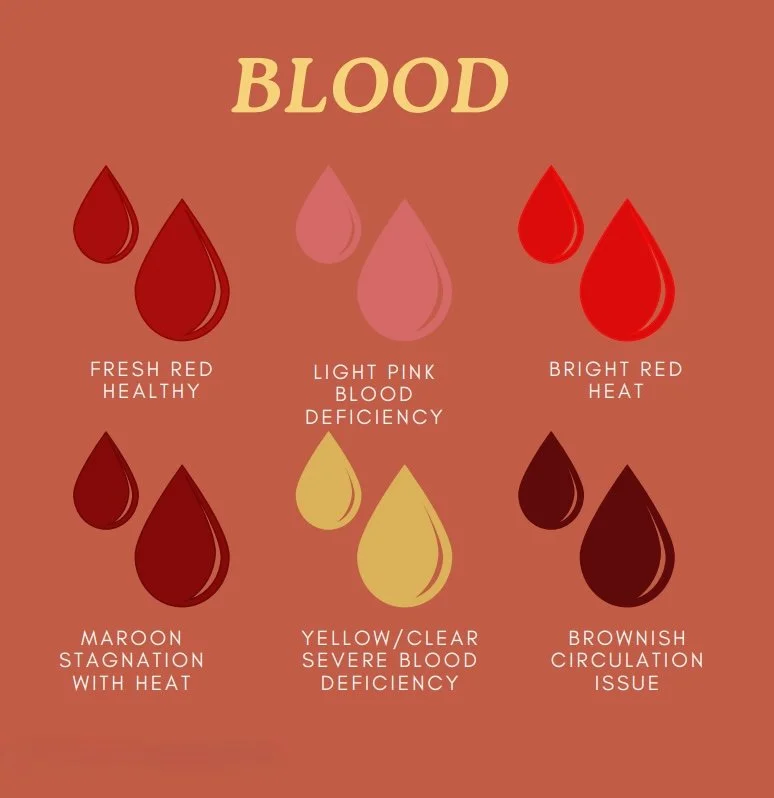
The specific nature of the disruption tells me exactly where the imbalance lives:
Blood Stagnation
Blood that struggles to flow freely (often from emotional suppression, cold, or physical trauma) produces cramping that feels like a sharp, stabbing or fixed pain. The blood may appear darker than optimal and with clots. Pain often improves with heat and worsens with cold. This pattern underlies a significant portion of dysmenorrhea (painful periods) and frequently appears in Endometriosis.
Liver Qi Stagnation
The Liver governs the smooth flow of Qi throughout the body and has a direct relationship with emotional processing. When stress, frustration, unexpressed emotion, or the relentless pace of modern life constricts Liver Qi, the premenstrual phase becomes volatile. Severe irritability, breast tenderness, bloating and headaches are the likely experience. The period itself may bring relief or it may arrive with cramps as the stagnant Qi struggles to move the Blood. This creates a sense of internal pressure that has nowhere to go.
Blood Deficiency
A body depleted of Blood through poor nutrition, overwork, blood loss, chronic illness, or the demands of pregnancy and postpartum produces a cycle that arrives late, flows lightly and brings a dull, aching quality rather than sharp pain. The blood may appear pale or thin. The woman herself may feel fatigued, anxious, or emotionally fragile around her period. Hair loss, poor sleep and difficulty concentrating often accompany this pattern.
Cold in the Uterus
When a cold pattern is present, whether from consuming excessive cold foods and drinks, exposure to cold environments, or a constitutional tendency toward cold, the free flow of Blood is impeded. The result is a severe cramping paired with cold hands and feet during menstruation and a cycle that tends to arrive late. Women with this pattern often have dark or purple menstrual blood and feel a deep chill at the onset of their period that no amount of layering seems to resolve.
Kidney Deficiency
The Kidneys provide the fundamental constitutional energy that sustains reproductive function. When Kidney energy runs low, the cycle may become irregular, the flow may diminish and the lower back and knees may ache around menstruation. This can be caused by genetic predisposition, chronic overwork, insufficient rest, aging or the cumulative demands of multiple pregnancies. This pattern underlies many cases of premature menopause, diminished ovarian reserve and the kind of bone-deep fatigue that arrives with the period and takes days to clear.
What Western Medicine Often Misses
Conventional medicine has made tremendous strides in diagnosing conditions like endometriosis, polycystic ovary syndrome (PCOS), fibroids and adenomyosis that create significant menstrual dysfunction and deserve medical attention. A thorough gynecological evaluation has a place in any responsible approach to menstrual health.
But conventional medicine also has a significant gap. It frequently addresses symptoms rather than the underlying terrain that created them. Birth control can regulate the surface expression of a cycle without addressing the deeper imbalance driving the dysfunction. NSAIDs like ibuprofen can manage pain without asking why the pain existed in the first place. And far too many women receive no diagnosis at all for conditions that profoundly affect their quality of life. They simply receive the message that this represents their “normal”.
East Asian Medicine approaches the menstrual cycle from an entirely different viewpoint. Rather than asking what condition matches these symptoms, I ask: what pattern of imbalance in this whole, unique person created these symptoms? And what needs to shift in the Qi, the Blood, the organ systems, the emotional landscape and the lifestyle in order for the body to find a different expression?
These two approaches serve different needs. And at their best they work together.
The Hidden Disruptors: How Environmental Toxins Affect the Menstrual Cycle
One dimension of menstrual health that both conventional and integrative medicine are only beginning to fully understand is the impact of environmental toxins on hormonal health.
Endocrine disrupting chemicals are substances found in everyday products such as plastics, pesticides, personal care products, cleaning supplies, nonstick cookware, fragrances and food packaging. These interfere with the body's hormonal signaling by blocking or altering the production of hormones like estrogen, progesterone and testosterone.
BPA and phthalates: found in plastics, food can linings and many personal care products. Both mimic estrogen in the body and have been associated with irregular cycles, early puberty and worsened endometriosis and PCOS symptoms.
Dioxins and PCBs: persistent environmental pollutants that accumulate in fatty tissue over time. Research has linked dioxin exposure to endometriosis, painful menstruation and disrupted ovarian function.
Pesticides and herbicides: particularly organochlorines, which accumulate in the body and have demonstrated estrogenic or anti-androgenic activity. Women with higher pesticide exposure have shown increased rates of cycle irregularity and longer time to conception.
Parabens: preservatives found widely in cosmetics, shampoos and lotions are absorbed through the skin. Parabens have been detected in breast tissue and uterine fibroids and carry estrogenic activity that may contribute to estrogen dominance.
Synthetic fragrances: frequently contain phthalates and other undisclosed chemicals. Labeled as "fragrance" on ingredient lists, they represent one of the most common and least regulated sources of endocrine disruption in daily life.
From a TCM perspective, these substances create what might be understood as a form of “toxic stagnation”, acting as an accumulation of pathogenic influence that burdens the Liver (the organ responsible for detoxification). This disrupts the hormonal environment and contributes to the patterns of stagnation, deficiency and heat.
Supporting the Liver's detoxification capacity through acupuncture and specific herbal formulas is an important part of a comprehensive approach to menstrual health. Reducing exposure where possible, choosing cleaner personal care and household products, eating organic foods and avoiding plastic containers represent practical and meaningful steps that complement clinical treatment.
How Acupuncture and Chinese Herbal Medicine Regulate the Cycle
Treatment for menstrual irregularities in East Asian Medicine unfolds across the entire cycle. The cycle has four distinct phases with its own hormonal and energetic character. I work with each phase specifically.
1. The Menstrual Phase: Moving and Releasing
During menstruation the focus turns to facilitating smooth, complete flow. Acupuncture points and herbal formulas encourage Liver Qi and Blood to move freely, reducing the stagnation that drives cramping. For women with significant pain, treatment in the days before and at the onset of menstruation can meaningfully reduce both intensity and duration of cramping.
2. The Follicular Phase: Building and Nourishing
After menstruation the body begins rebuilding its Blood and Yin (the cooling, nourishing, restorative aspect of the body's energy) in preparation for ovulation. Treatment at this phase focuses on nourishing Blood and Kidney Yin, supporting the development of healthy follicles and creating the rich, receptive uterine environment that healthy ovulation requires.
3. The Ovulatory Phase: Moving and Releasing
The transition from follicular to luteal phase requires a significant surge of energy to trigger ovulation. Acupuncture at this phase supports the smooth movement of Kidney Yang (the warming, activating energy) and Liver Qi that facilitates a healthy, timely release. Women with Liver Qi stagnation may struggle to ovulate smoothly and treatment here can make a meaningful difference for both cycle regularity and fertility.
4. The Luteal Phase: Warming and Sustaining
After ovulation, the body relies on Kidney Yang and progesterone to sustain the uterine lining and support either implantation or a smooth menstruation. When this phase runs deficient, PMS worsens, cycles shorten and the emotional volatility of the premenstrual phase intensifies. A warming and tonifying treatment in the luteal phase addresses the root of most PMS presentations.
The Role of Chinese Herbal Medicine
Acupuncture and Chinese herbal medicine work synergistically in the treatment of menstrual conditions and herbal medicine often provides the sustained daily support that acupuncture sessions begin. While acupuncture communicates with the body in a treatment room once or twice a week, herbs continue that conversation every day.
Classical herbal formulas for menstrual health have been refined over centuries. Some of the most impactful include:
Xiao Yao San (Free and Easy Wanderer): a classic formula for Liver Qi stagnation, premenstrual irritability, breast tenderness and emotional volatility. Moves Liver Qi, nourishes Blood and supports the Spleen.
Dang Gui Si Ni Tang: a warming formula for Cold in the Uterus with severe cramping. Warms the channels, disperses cold and moves Blood.
Si Wu Tang (Four Substance Decoction): the foundational Blood nourishing formula that addresses Blood deficiency patterns with light or irregular flow, dull cramping and fatigue.
Tao Hong Si Wu Tang: Si Wu Tang with the addition of blood-moving herbs addresses stagnation patterns with darker flow, clotting and fixed cramping.
Wen Jing Tang (Warm the Menses Decoction): a complex formula for Cold and Blood deficiency patterns, often used for irregular cycles with cold sensations, scanty flow and lower abdominal pain that responds to warmth.
All herbal prescriptions at The Acupuncture Portal are individually formulated and adjusted as the cycle evolves. What a woman needs in week one of treatment often differs meaningfully from what she needs in week six. This medicine demands and rewards careful, ongoing attention.
A Note to Every Woman Who Was Told Painful Periods Represents Her Normal
If you have spent years or decades managing menstrual pain with ibuprofen and willpower, told by well-meaning practitioners that this simply comes with being a woman…I want to say something clearly:
Your pain has a message. And the fact that no one helped you read it yet does not mean the message is wrong.
It’s not too late to begin the work of listening.
I have helped women who had painful periods for years experience their first pain-free cycle after two months of treatment. I have witnessed cycles that have been irregular from going off birth control transform into a reliable rhythm. I have seen the severe, monthly pain of endometriosis in women gradually fade away.
Your cycle can change. And you deserve a period that does not require surviving.